Reflections · How I Work
Why I chose Victoria — and what I hope to build here
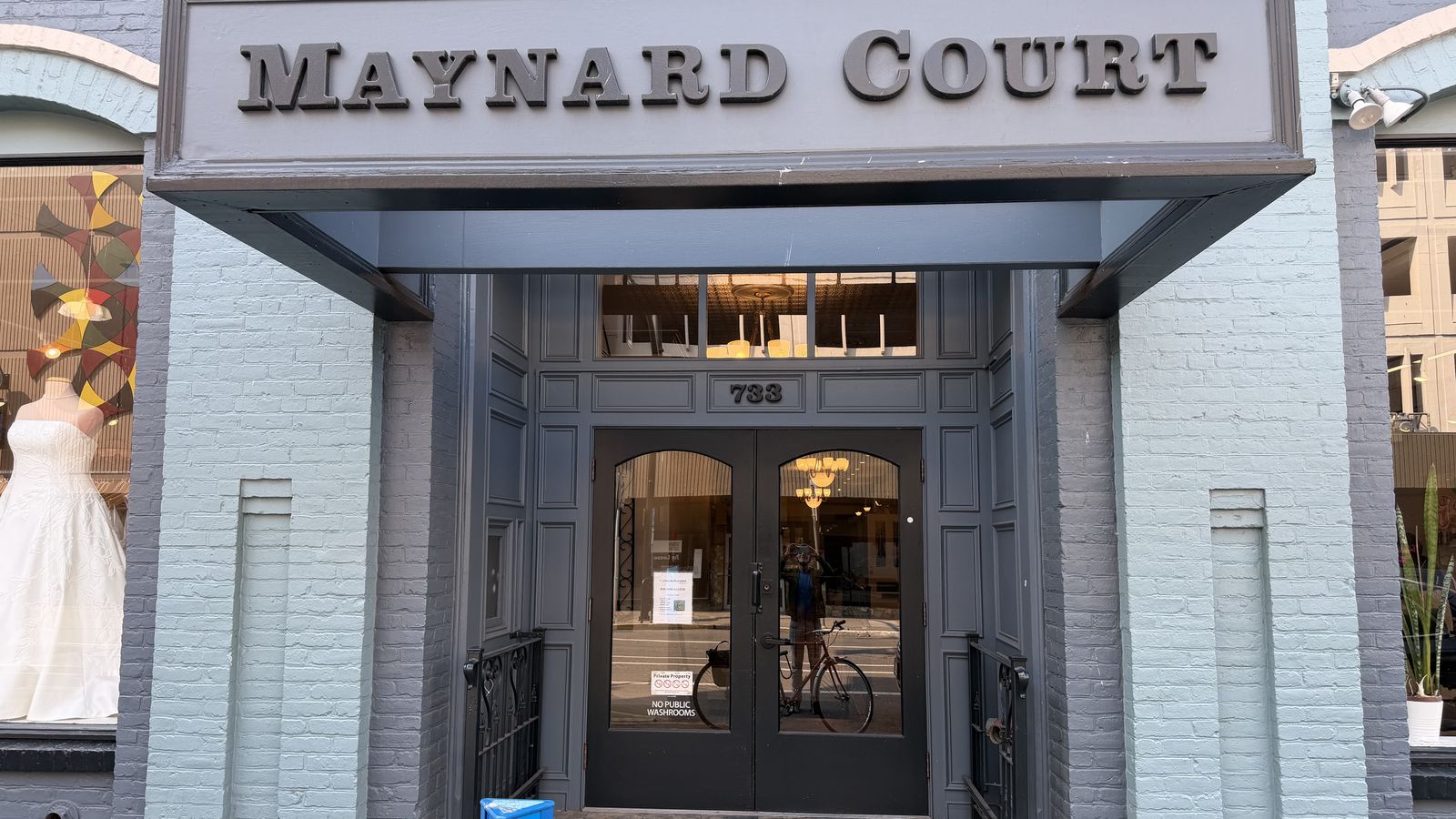
I chose Victoria because it's a city people choose on purpose — for the water, the walkability, the human scale, the life. And after eighty-plus years of research, we know what actually delivers a good life: not the view, but the quality of your closest relationships. My practice exists to work on exactly that, a few blocks from the harbour, at Maynard Court on Johnson Street.
A practice with a front door
Victoria Relationship Therapy lives at Maynard Court, 733 Johnson Street — a quiet suite behind a heritage-style entrance in downtown Victoria, a short walk from the Inner Harbour. I wanted a real front door in the middle of the city, not a unit in a suburban complex you have to talk yourself into visiting. Coming to therapy takes nerve, especially the first time, and especially for men. The least I can do is make the walk in feel like the rest of your downtown life: ordinary, dignified, five minutes from a good coffee.
Why Victoria?
I spent twenty-five years as a business lawyer before I became a therapist, most of it in the deal-driven corners of the profession. When it came time to build the second practice, I got to ask a question most people only get to ask once or twice in a life: where do you want to do work that matters?
Victoria was the honest answer. Roughly 400,000 people live across Greater Victoria's thirteen municipalities (2021 Census), and a striking share of them are here deliberately — they moved for the ocean, the trails, the gardens, the pace, or they stayed for those things when they could have left. This is a city organized around quality of life. People walk here. They talk to their neighbours. They retire here on purpose and start families here on purpose.
And that's exactly why a relationship practice belongs here. Because the research is blunt about what quality of life actually is.
The research is blunt: relationships are the point
The Harvard Study of Adult Development — the longest-running study of adult life ever conducted, more than eighty years and counting — keeps arriving at the same conclusion: close relationships, more than money, fame, social class or even genes, are what keep people happy and healthy across a lifetime. The study found that how satisfied people were with their relationships at age 50 was a better predictor of their physical health at 80 than their cholesterol levels. Its director, psychiatrist Robert Waldinger, puts the other side just as plainly: "Loneliness kills. It's as powerful as smoking or alcoholism."
Read that again slowly. The thing most of us treat as the backdrop of life — the marriage, the family dinners, the friendships — is the single strongest lever on how that life goes. Not the career. Not the portfolio. I spent a lot of years around people who had optimized everything except this, and I watched what it cost them. It's a large part of why I practise Relational Life Therapy.
Victoria's quiet paradox
Here's the part that sealed the decision. For all its livability, Victoria's connection numbers are slipping. According to Statistics Canada data reported in the Victoria Foundation's Vital Signs, only 62% of Greater Victoria residents reported a somewhat or very strong sense of community belonging in 2021/22 — down from 72% just two years earlier, and below both the BC (68%) and Canadian (67%) averages.
Sit with that: in one of the most beautiful, most deliberately chosen cities in the country, nearly four in ten of your neighbours don't feel strongly that they belong. You can be surrounded by ocean and gardens and still be lonely at your own kitchen table. A postcard city doesn't protect a marriage from the pursue-and-withdraw spiral, or a capable man from going quietly numb, or a couple from becoming excellent roommates. Beautiful scenery, distant marriage — it's a more common combination than anyone admits.
What I hope to contribute
My ambition for this practice is specific: to raise the quality of my clients' closest relationships, because that is the most direct way to raise the quality of their lives. Not vague "communication skills." The real thing — couples who stop having the same fight and find their way back to actually liking each other; men who trade the wall for a voice; individuals who stop running patterns that were built for survival a long time ago. Relational Life Therapy calls the goal full-respect living — relationships where nobody wins by making the other person lose. That's what I want more of in this city, one living room at a time.
So that's the plan, and this is the invitation. If you're in Greater Victoria, the office is at Maynard Court downtown — here's where to find me — and if you're anywhere else in BC, we can meet by secure video. It starts with a free 15-minute call, which costs you nothing but the nerve to book it.
You chose this place for the quality of the life it offers. Make sure the relationships inside that life are worthy of it.
Common questions
Where is Victoria Relationship Therapy located?
At Maynard Court, 733 Johnson Street, Unit 228, in downtown Victoria, BC — a short walk from the Inner Harbour, with transit and parking nearby. I send exact arrival and parking details when we book your first session.
Do you only see clients in Victoria?
No. In-person sessions happen in downtown Victoria, and I work with clients across all of British Columbia by secure video. Many couples and individuals do some sessions in person and some online, depending on schedules.
What areas of Greater Victoria do you serve?
All thirteen municipalities of the Capital Region — including Victoria, Saanich, Oak Bay, Esquimalt, Langford, Colwood and the peninsula communities — plus anywhere else in BC online.
Why does relationship quality matter so much to health and happiness?
The Harvard Study of Adult Development, running for more than eighty years, found that satisfaction with relationships at age 50 predicted physical health at 80 better than cholesterol levels did — and that close relationships beat money, fame and class as predictors of a long, happy life. Loneliness, meanwhile, carries health risks its director compares to smoking.
What kind of therapy do you practise?
My primary training is Relational Life Therapy, Terry Real's approach — direct without being harsh, warm without being soft — and I integrate Emotionally Focused Therapy, the Gottman Method and Internal Family Systems. I work with couples, men, and individuals.
Is Victoria really a lonely city?
It's a livable city with a real connection problem. Statistics Canada data reported in Victoria's Vital Signs show 62% of Greater Victoria residents felt a strong sense of community belonging in 2021/22, down from 72% two years earlier and below the BC average. Livability and connection are not the same thing — one is the setting, the other is the life.
How do I get started?
Book a free 15-minute phone consultation. We'll talk about what's going on, whether we're a fit, and what working together would look like — no pressure, no commitment. If I'm not the right person, I'll do my best to point you to someone who is.
A note: This article is general information, not therapy or a substitute for it. If you're in crisis or need urgent help, please call or text 9-8-8 (Suicide Crisis Helpline) or call 9-1-1.